
Weigh Feeder
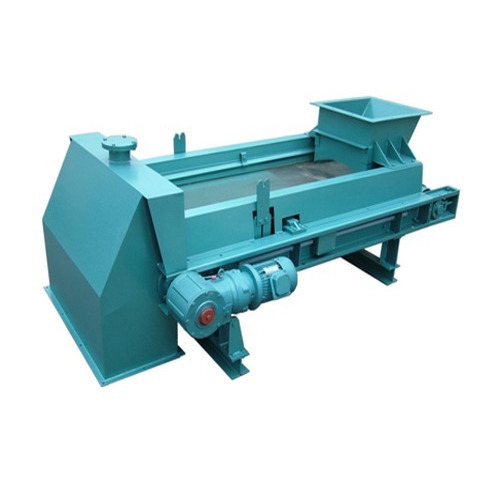
A weigh feeder is a gravimetric system for accurately measuring and controlling the continuous flow rate of bulk solid materials using a moving conveyor belt, load cells, and a speed sensor to maintain a constant feed. It consists of a hopper, a weigh bridge (weighing section) with load cells to measure the material's weight on the belt, and a digital tacho to measure the belt's speed. The system calculates the mass flow rate from the load and speed, then compares it to a setpoint and adjusts the belt's speed via a closed-loop control system to achieve the desired constant output.
Key Components and Function
- Hopper: Supplies bulk solid material to the feeder.
- Conveyor Belt: Transports the material over the weighing section.
- Weigh Bridge/Section: A section of the conveyor belt equipped with rollers and one or more load cells to measure the weight of the material.
- Load Cells: Sensors that measure the instantaneous load (weight) on the belt.
- Belt Speed Sensor (Tacho): A device, often a tacho or encoder, that measures the speed of the conveyor belt.
- Electronic Controller: A micro-controller that receives data from the load cells and speed sensor to calculate the mass flow rate.
How It Works
- Material Flow: Bulk material flows from a hopper onto the moving conveyor belt.
- Weighing: The load cells on the weigh bridge measure the weight of the material on a fixed length of the belt.
- Speed Measurement: The belt speed sensor measures the conveyor's speed.
- Flow Rate Calculation: The controller uses the measured load and speed to calculate the mass flow rate (mass per unit time).
- Feedback Control: The calculated flow rate is compared to the setpoint. If there is a difference, the controller adjusts the belt's motor speed to correct the flow rate, ensuring a consistent output.
Applications
Weigh feeders are used in various process industries, such as steel, cement, fertilizer, and chemical industries, for accurate and continuous proportioning of solid materials. They are crucial for optimizing production, ensuring product quality, and managing inventory.