
Compression Type - 10 Ton to 600 Ton
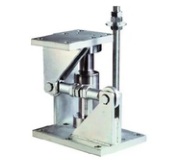
A compression load cell is a sensor that measures downward "pushing" or "squashing" forces along a single axis, typically placed under a weight or object to be measured. These specialized devices translate the applied compressive force into an electrical signal, which is then converted into a quantifiable and monitorable value. They are indispensable in many industrial applications for high-capacity static weighing, such as in vehicle scales, silos, and material testing, and come in various internal designs like column, ring-torsion, shear, or bending.
How it Works
-
Force Application:
An object or load is placed on top of the compression load cell, exerting a downward force.
-
Deformation:
The load cell's internal structure (e.g., a metal column) deforms slightly under this pressure.
-
Electrical Conversion:
This physical deformation, or strain, is detected by strain gauges or similar mechanisms built into the load cell.
-
Signal Output:
The strain gauges convert this strain into an electrical signal, which is then conditioned and amplified for accuracy.
Key Characteristics and Applications
-
Unidirectional:
Designed to measure forces in only one direction (compression).
-
High Capacity:
Many types are suited for measuring very high loads in static weighing applications.
-
Durable Construction:
Often made from materials like stainless steel for durability and resistance to corrosion in demanding industrial environments.
-
Versatile Internal Designs:
Various internal mechanisms (column, shear, ring-torsion) allow for different capacities and precision levels.
-
Common Uses:
Found in vehicle scales, weighing platforms for heavy goods, silo weighing, material testing machines, and press monitoring.