
Bending Beam Shear Beam - 10 KG to 1000 KG
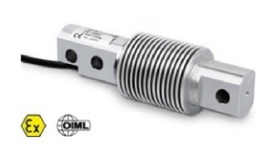
Bending beam and shear beam load cells are types of force transducers used in weighing and force measurement, differing mainly in their design and the way they measure force. A bending beam features a rectangular block with a complete, through-hole, while a shear beam has a partial hole bored partway through its sides. Both types utilize strain gauges or thin-film sensors to detect deformation caused by an applied force, converting this into a measurable electrical signal for weight or force.
Bending Beams
-
Design:
A rectangular block of material with a strain gauge mounted on its surface or within its structure.
-
Function:
When a force is applied to the beam, it bends, and the strain gauges detect the resulting stretch or compression, changing their electrical resistance.
-
Applications:
Often used in weighing small to medium-sized vessels, platform scales, and weighing in process and dosing systems.
Shear Beams
-
Design:
A straight block with a distinctive partial hole or slot bored partway through its sides.
-
Function:
The applied load causes the beam to deform in a shear mode, and the strain gauges or thin-film sensors (which are often laser-welded into the beam) detect this deformation to measure the force.
-
Applications:
Employed in industrial weighing, including for large vessels and platforms, as well as in various industrial and agricultural applications.
Common Features and Applications
-
Sensors:
Both utilize strain gauges or thin-film sensors to measure force accurately and reliably.
-
Accuracy:
They are known for providing precise measurements in both static and dynamic applications.
-
Versatility:
These load cells find application in diverse fields such as agriculture, chemical industries, medical technology, machine building, and automation.
-
Mechanism:
They function by translating the deformation of the sensing element into an electrical signal, which is then converted into a weight or force value.